

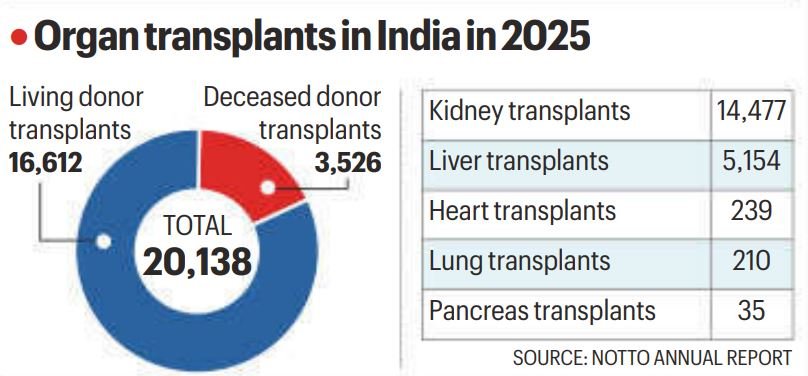
The National Organ and Tissue Transplant Organisation (NOTTO) has launched a real-time digital portal and mobile application to streamline organ transplantation across the country. The platform is designed to create a unified national waiting list, monitor organ allocation in real time and improve transparency in the transplantation process. It will also allow hospitals and state authorities to raise “super urgent” requests for patients requiring immediate transplants.
Also Read: PM Modi Inaugurated Andhra Pradesh’s First Greenfield Airport, Launched Projects Worth 17,900 Crore
Unified Platform to Improve Coordination
Under the new system, patients requiring organ transplants will continue to register through hospitals offering transplant services. Hospitals, state health departments and NOTTO will update patient records directly on the portal, which will automatically generate hospital level, state level, regional and national waiting lists. The platform will digitally track organ movement and allocation, replacing fragmented record-keeping systems with a single nationwide database.
Also Read: MSME Development Bill Cleared by Rajya Sabha Despite Uproar
Aadhaar Linked Pledges and National Swap Matching Introduced
The portal also introduces Aadhaar-linked organ pledges to provide clear documentation of a donor’s intent. Another key feature is nationwide matching of swap donors, allowing incompatible donor-recipient pairs from different hospitals to be matched through a larger national pool. Hospitals will also record patients’ health status after transplantation, creating India’s first comprehensive national database on transplant outcomes.
Also Read: 1500 Khunti Farmers Turned to Marigold Cultivation for Better Income, Replaced Illegal Poppy Fields
Common Digital Platform, State Allocation Rules to Continue
According to NOTTO officials, organ allocation will continue to follow the existing priority system. The hospital where an organ donation takes place will retain the first right to allocate the organ. If no suitable recipient is available, the organ will move to the state, regional and finally the national pool. While the portal provides a common digital platform, allocation priorities will continue to be governed by individual state guidelines until a uniform national framework is developed. Officials said the portal has already gone live, with all remaining modules expected to become fully operational within the next two months.
Also Read: Students Continued Indefinite Protest Over JPSC-JSSC Recruitment Row, BJP Demanded CBI Probe