

Tata Steel has outlined a new long term business strategy that places greater emphasis on value added steel products, indicating a shift from expanding conventional steelmaking capacity to strengthening downstream businesses. The roadmap comes amid expectations that the industry’s cost structure will undergo significant changes after 2030 due to rising iron ore prices, royalties, premiums and higher raw material costs.
Company Bets on High Value Steel Products
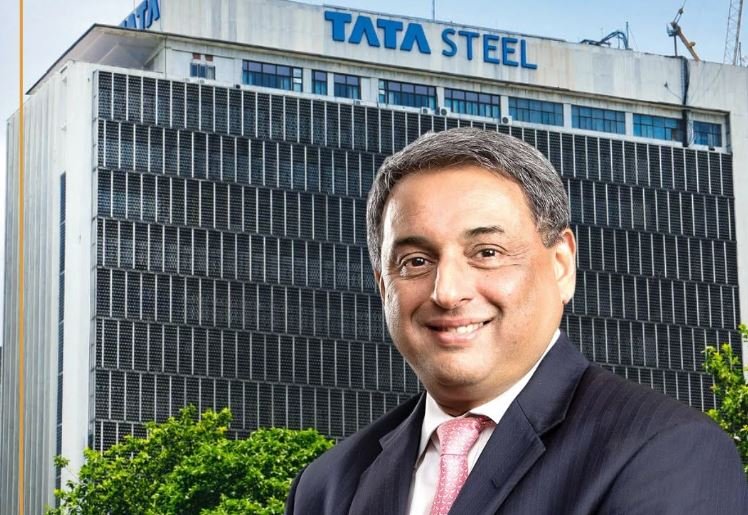
Speaking during the company’s earnings call with investors, Tata Steel CEO & Managing Director T.V. Narendran and Chief Financial Officer Kaushik Chatterjee said future profitability would depend less on increasing mining output or crude steel production and more on operational efficiency and value addition. They noted that if steelmakers are required to procure iron ore at market rates after 2030, production costs are likely to rise further, making downstream products a more sustainable growth avenue.
Also Read: Displaced Landowners Continued Protest Over Delayed Employment at JSW Coal Block
Tinplate, Tube and Wire Businesses Set for Major Expansion
As part of the strategy, Tata Steel will install one of India’s most advanced hot-rolled galvanising lines at its Tarapur plant to serve the automotive, infrastructure and industrial sectors. The company also plans to double its tinplate production capacity, citing an additional value realisation of Rs. 20,000 to Rs. 25,000 per tonne compared to conventional hot-rolled steel. Its tube manufacturing capacity is proposed to increase from the current 1-1.5 million tonnes to 4 million tonnes, while wire production capacity will be expanded from 0.6 million tonnes to 1 million tonnes to meet growing demand from the automobile and construction industries.
Also Read: Odisha Reviewed Land for Proposed Integrated Steel Plant of JSW Steel in Keonjhar District
Domestic Market to Remain Growth Driver
Tata Steel also announced plans to establish two new Electric Arc Furnaces (EAFs), based on its Ludhiana model, to produce steel through scrap recycling. Over the next 30 months, the company does not intend to build a new integrated steel plant in India, choosing instead to invest in facilities that convert existing steel into higher-value products. The management said its domestic expansion strategy remains independent of business conditions in Europe and will continue to focus on strengthening customer-oriented operations and improving returns through specialised steel products rather than merely increasing production volumes.
Also Read: Power Plant Workers Submitted Memorandum Seeking Restoration of Jobs in Rashmi Group
One thought on “Tata Steel Planned Major Expansion in Tinplate, Tube and Wire Businesses”
Comments are closed.